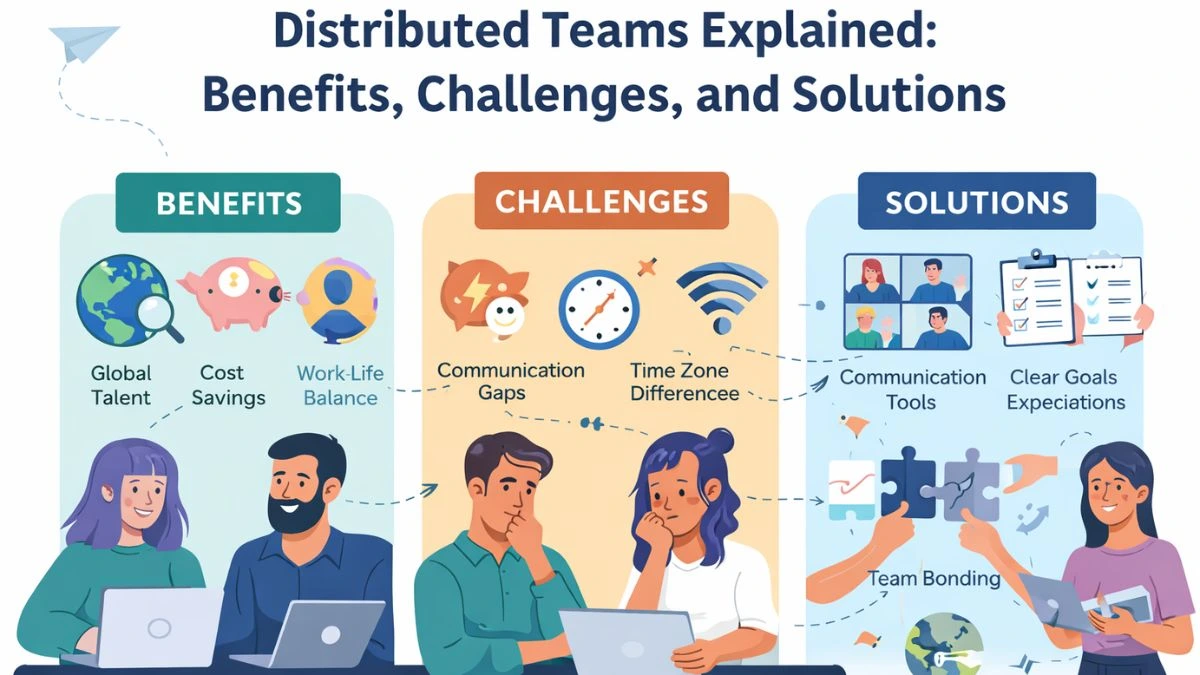
The modern workplace is no longer tied to a single office or even one country. In 2026, distributed teams are becoming the foundation of how global companies operate. From startups to large enterprises, organizations are embracing geographically spread teams to access talent, reduce costs, and stay competitive.
But while distributed teams offer major advantages, they also come with unique challenges. This guide explains what distributed teams are, their key benefits, common challenges, and practical solutions for long-term success.
What Are Distributed Teams?
A distributed team is a group of employees working from different locations, often across cities, countries, or continents. Unlike traditional teams, distributed teams may never meet in person and rely heavily on digital communication and collaboration tools.
Distributed teams can be:
- Fully remote
- Hybrid with multiple office locations
- Global teams across time zones
This model allows businesses to function around the clock and scale faster.
Benefits of Distributed Teams
1. Access to Global Talent
One of the biggest advantages of distributed teams is the ability to hire the best talent worldwide. Companies are no longer limited by geography and can build diverse, skilled teams.
2. Increased Productivity
Many distributed teams report higher productivity due to:
- Fewer office distractions
- Flexible work schedules
- Outcome-focused performance
Employees can work during their most productive hours.
3. Cost Efficiency for Businesses
Distributed teams help reduce costs related to:
- Office space and utilities
- Relocation expenses
- Commuting allowances
This allows companies to invest more in growth and innovation.
4. Better Work-Life Balance
For employees, distributed work offers:
- Flexible schedules
- Reduced commuting stress
- More personal time
This leads to higher job satisfaction and retention.
Challenges of Distributed Teams
Despite the benefits, distributed teams face real challenges that leaders must address.
1. Communication Gaps
Without face-to-face interaction, misunderstandings can occur more easily. Time zone differences can delay responses and decision-making.
2. Lack of Team Connection
Team members may feel isolated or disconnected, which can impact collaboration and morale.
3. Performance Visibility Issues
Managers may struggle to track progress and performance without falling into micromanagement.
4. Cultural and Time Zone Differences
Distributed teams often include diverse cultures and work schedules, which can create coordination challenges.
Solutions for Managing Distributed Teams Successfully
1. Establish Clear Communication Practices
Successful distributed teams rely on structured communication:
- Define preferred communication channels
- Set response-time expectations
- Use documentation for clarity
Clear communication reduces confusion and builds trust.
2. Focus on Outcomes, Not Hours
Instead of tracking working hours, leaders should measure:
- Task completion
- Quality of work
- Impact on goals
This approach encourages accountability and autonomy.
3. Invest in the Right Collaboration Tools
Technology is essential for distributed teams. Common tools include:
- Project management platforms
- Team chat and video conferencing
- Shared document systems
The goal is smooth collaboration, not constant monitoring.
4. Build a Strong Distributed Team Culture
Leaders should intentionally create connection by:
- Celebrating achievements
- Encouraging informal interactions
- Promoting inclusivity and respect
A strong culture keeps distributed teams engaged and motivated.
5. Support Mental Well-Being and Flexibility
Distributed work can blur boundaries between work and personal life. Leaders should encourage:
- Reasonable workloads
- Flexible schedules
- Regular breaks
This prevents burnout and improves long-term performance.
Best Practices for Long-Term Success
To make distributed teams sustainable:
- Document processes and workflows
- Provide continuous feedback
- Encourage learning and development
- Maintain transparency in leadership decisions
Consistency is key to success.
Also Read :Remote Client Acquisition Roles: Skills You Must Have
Final Thoughts
Distributed teams are reshaping the future of work. When managed correctly, they offer unmatched flexibility, access to global talent, and strong business growth. However, success depends on clear communication, trust, the right tools, and supportive leadership.
Organizations that embrace these principles will thrive in a distributed work environment and stay ahead in an increasingly digital world.
FAQs – Distributed Teams
Q1. What is the difference between remote and distributed teams?
Remote teams may work from home but often within the same region, while distributed teams are spread across multiple locations or countries.
Q2. Are distributed teams effective?
Yes. With proper communication, tools, and leadership, distributed teams can be highly productive and successful.
Q3. How do companies manage time zones in distributed teams?
By using overlapping work hours, flexible schedules, and asynchronous communication.
Q4. What skills are important for distributed team members?
Communication, self-discipline, adaptability, and digital collaboration skills.
Q5. Can distributed teams work long-term?
Absolutely. Many global companies now operate entirely with distributed teams.