Remote work promised freedom. No commute. Flexible hours. More control over your day.
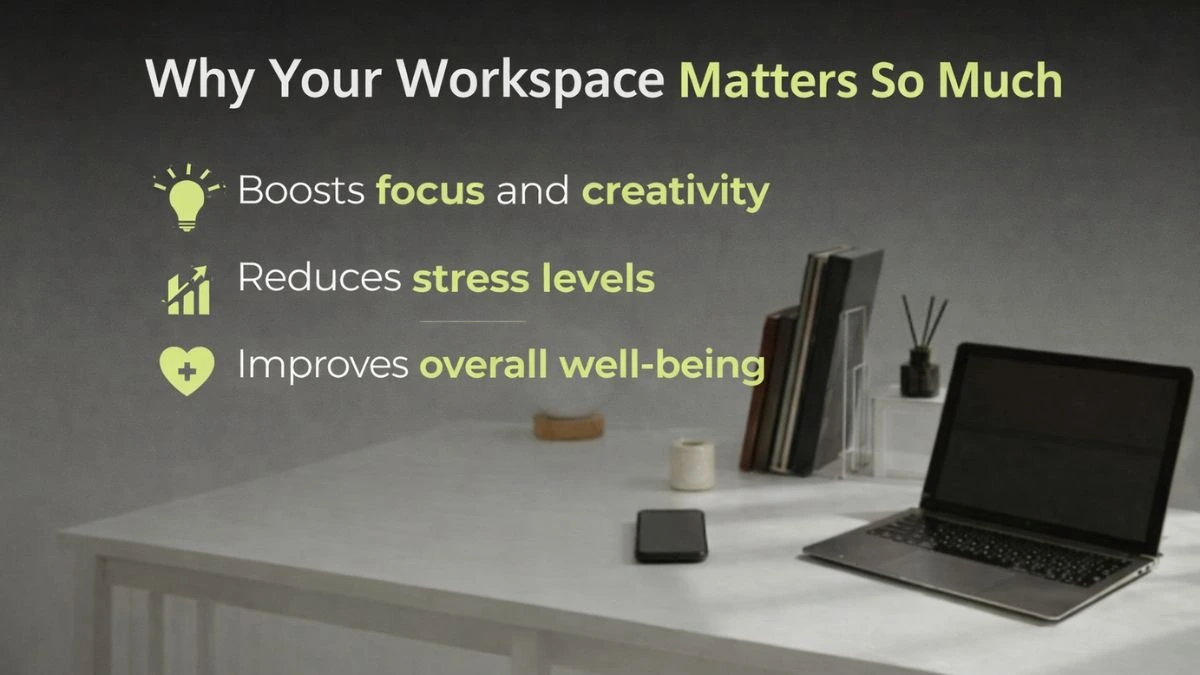
But as millions shifted to working from home, one truth became clear: your workspace can make or break your productivity, focus, and mental well-being.
For some, remote work feels like a dream. For others, it’s exhausting and overwhelming. The difference often comes down to one critical factor — the environment in which you work.
Let’s explore why your workspace matters so much, and how it shapes your daily performance, stress levels, and long-term career satisfaction.
1. Your Workspace Directly Impacts Productivity
Not all work-from-home setups are equal.
Some professionals have:
- A dedicated home office
- Proper desk and ergonomic chair
- Strong Wi-Fi
- Quiet surroundings
- Natural light
Others work from:
- Their bedroom
- A kitchen table
- A shared apartment
- A noisy neighborhood
- Spaces with unreliable internet
When your workspace is calm, organized, and distraction-free, your brain can focus more deeply. But when you’re constantly adjusting your laptop, fighting noise, or negotiating space with roommates, your mental energy drains faster.
Every interruption costs focus. And focus is your most valuable resource.
2. Space Is a Privilege — and It Shapes Experience
Studies show that nearly half of remote workers do not have a dedicated workspace. That means millions are working in shared or multi-purpose areas.
Younger professionals, renters, and people living in cities are more likely to:
- Share space
- Live in smaller homes
- Lack private rooms
- Experience higher stress from blurred boundaries
Meanwhile, those with larger homes or garden offices often report:
- Better concentration
- Greater job satisfaction
- Improved work-life balance
Remote work isn’t experienced equally. Physical space often determines whether it feels empowering or exhausting.
3. Noise: The Hidden Productivity Killer
Sound plays a bigger role than most people realize.
Noise from:
- Traffic
- Neighbors
- Children
- Roommates
- Construction
…can significantly reduce cognitive performance.
Unlike office noise, which many are mentally trained to filter out, home noise feels personal and harder to ignore. It can increase stress and reduce deep focus.
For parents, especially mothers, the impact can be even greater. The “responsibility distraction” — being mentally alert to children’s needs while working — creates cognitive strain that reduces performance and increases burnout risk.
A quiet workspace isn’t just comfortable. It’s powerful.
4. Boundaries Between Work and Life Matter
Before remote work became widespread, the office created a psychological boundary.
You left the house.
You entered a professional environment.
You returned home at the end of the day.
Now, those lines blur.
When your workspace is your bedroom or living room:
- Work thoughts follow you into rest time
- It becomes harder to “switch off”
- Stress lingers longer
- Sleep can be affected
Having a dedicated workspace — even a small one — creates a mental shift. It signals to your brain when work starts and when it ends.
Even a short physical transition (like walking into a separate room or stepping into a garden office) can dramatically improve clarity and balance.
5. Video Calls Changed the Rules of Professionalism
Remote work introduced a new dynamic: inviting colleagues into your home.
Suddenly, people are subconsciously judged by:
- Background setup
- Lighting
- Camera quality
- Room aesthetics
- Sound clarity
This shift can create subtle anxiety, especially for those without ideal setups.
In traditional offices, everyone had access to similar environments. Now, home workspaces reflect personal financial situations, housing conditions, and lifestyle differences.
That can increase pressure and self-consciousness — especially for younger employees or those in shared housing.
6. Mental Health and Workspace Design
Your environment influences your mood more than you think.
Research in environmental psychology shows that key factors affecting well-being include:
- Natural light
- Air quality
- Color
- Noise levels
- Visual clutter
- Ergonomics
A dark, cluttered, uncomfortable space can lead to:
- Fatigue
- Reduced motivation
- Higher stress
- Physical discomfort
A well-designed space encourages:
- Focus
- Calmness
- Creative thinking
- Energy stability
Small changes — like improving lighting or decluttering — can create measurable improvements in performance.
7. The Hybrid Future: A Practical Compromise
As companies rethink workplace policies, many experts predict a hybrid model:
- 2–3 days at home
- 2–3 days in office
This model may solve several problems:
- Home for deep focus work
- Office for collaboration
- Reduced commuting stress
- Better social connection
The key question organizations now ask is:
Whose home environment supports productivity — and whose doesn’t?
Understanding workspace inequality will shape the future of work policies.
How to Improve Your Workspace (Even on a Budget)
Not everyone can build a garden office. But small improvements make a big difference.
1. Create a Defined Zone
Even if you live in a small space, try to:
- Use one consistent corner
- Avoid working from bed
- Visually separate work items after hours
2. Upgrade Lighting
Natural light is ideal. If not possible:
- Use warm desk lamps
- Avoid harsh overhead lighting
3. Improve Ergonomics
- Raise laptop to eye level
- Use cushions for back support
- Keep feet flat on the ground
4. Control Sound
- Use noise-canceling headphones
- Play neutral background sounds
- Communicate quiet hours with housemates
5. Reduce Visual Clutter
A clean desk reduces mental overload. Simplicity supports clarity.
Also Read : Beginner Friendly Data Analysis Jobs That Pay Big
Final Thoughts
Remote work isn’t just about flexibility. It’s about environment.
Two people can have the same job, same company, and same responsibilities — yet completely different remote work experiences — simply because of where and how they work.
Your workspace shapes:
- Your focus
- Your productivity
- Your stress levels
- Your mental clarity
- Your long-term job satisfaction
As remote and hybrid work become permanent parts of modern careers, understanding the power of environment isn’t optional — it’s essential.
Because in the end, where you work influences how well you work.
FAQs
Why is a dedicated workspace important?
It improves focus, reduces stress, and creates psychological boundaries between work and personal life.
Does workspace affect mental health?
Yes. Lighting, noise, space, and privacy directly influence mood, anxiety levels, and overall well-being.
Why do younger workers struggle more with remote work?
Many live in smaller shared spaces without private rooms, making focus and work-life separation more difficult.
Is remote work better than office work?
It depends on individual living conditions. Those with quiet, private space often thrive. Others may prefer structured office environments.
What is the biggest challenge of working from home?
For many, it’s managing distractions, maintaining boundaries, and dealing with inadequate workspace conditions.