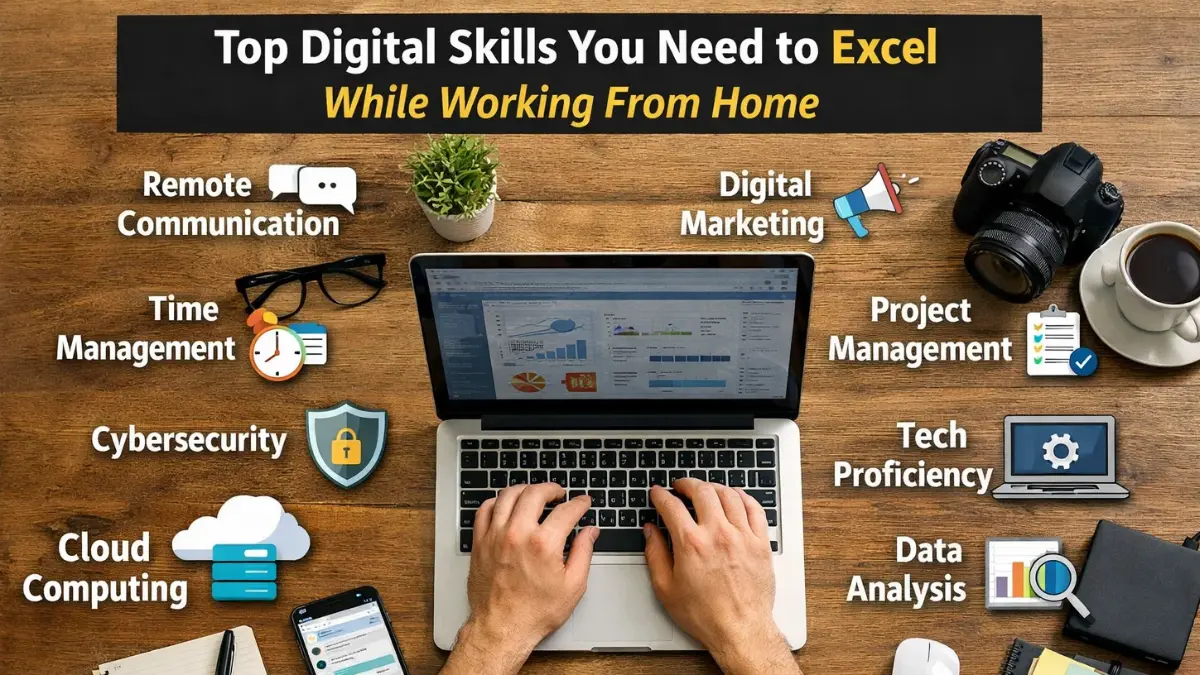
The work from home (WFH) trend has reshaped the modern workforce. With remote work becoming a norm, having the right digital skills is no longer optional—it’s essential. Whether you are a freelancer, employee, or entrepreneur, mastering these skills will help you stay productive, competitive, and advance your career in a digital-first world.
This article explores the top digital skills needed to excel while working from home, the tools that can help, and strategies to continuously improve your skillset.
1. Digital Skills Communication

Remote work relies heavily on clear and effective communication. This includes:
- Email etiquette: Crafting concise, professional emails.
- Video conferencing: Using Zoom, Microsoft Teams, or Google Meet efficiently.
- Instant messaging: Slack or Teams chat for collaboration.
- Documentation: Sharing updates and reports in a structured way.
Tip: Always keep your communication polite, clear, and actionable.
2. Project Management Tools
Managing tasks and deadlines remotely requires digital project management Digital Skills. Key tools include:
- Trello – For organizing tasks using boards and cards
- Asana – For tracking projects and assigning responsibilities
- Monday.com – For team collaboration and workflow management
- Notion – For creating digital workspaces and knowledge bases
Proficiency in these tools helps you stay organized, meet deadlines, and collaborate effectively.
3. Data Analysis and Visualization
Data-driven decision-making is vital even while working remotely. Some key Digital Skills:
- Excel/Google Sheets: Advanced functions, pivot tables, formulas
- Data visualization: Using Tableau, Power BI, or Google Data Studio
- Analytical thinking: Interpreting trends and insights
Why it matters: Companies increasingly value remote employees who can analyze, interpret, and present data independently.
4. Digital Marketing Skills
The shift to online business has created high demand for digital marketing experts. Important skills include:
- SEO (Search Engine Optimization): Improve website visibility
- Social media management: Facebook, Instagram, LinkedIn marketing
- Email campaigns: Designing effective newsletters and promotions
- Content marketing: Writing blogs, copywriting, video scripts
Tip: Certifications from platforms like Google Digital Garage or HubSpot can boost credibility.
5. Basic Tech Troubleshooting and IT Skills
Even remote employees need basic IT knowledge:
- Setting up VPNs for secure access
- Troubleshooting internet or hardware issues
- Understanding cloud storage platforms (Google Drive, Dropbox)
- Managing software updates and cybersecurity basics
Pro Tip: Being self-sufficient in tech reduces dependency on IT support and boosts productivity.
6. Cloud Computing and Collaboration Tools
Remote work relies heavily on cloud-based solutions:
- Google Workspace – Docs, Sheets, Drive
- Microsoft 365 – Word, Excel, Teams, OneDrive
- Slack & Zoom – For real-time communication and meetings
- Dropbox/Box – For secure file storage and sharing
Mastering these tools ensures smooth collaboration and efficiency from anywhere.
7. Graphic Design and Multimedia Skills
Visual communication is increasingly important, especially for marketing and content creation roles. Key skills:
- Canva – Easy design tool for graphics and presentations
- Adobe Photoshop/Illustrator – For professional-level design
- Video editing tools – Adobe Premiere, Final Cut Pro, or DaVinci Resolve
- Infographics creation – To visually present data or insights
Why it matters: Well-designed content helps remote teams and clients engage and understand information faster.
8. Cybersecurity Awareness
With WFH, employees are often accessing company systems from home networks. Cybersecurity Digital Skills include:
- Recognizing phishing emails and scams
- Using strong passwords and password managers
- Ensuring secure Wi-Fi and VPN usage
- Protecting sensitive company data
Tip: Cybersecurity awareness can prevent costly breaches and protect professional credibility.
9. Online Collaboration and Networking Skills
Remote work requires the ability to connect, collaborate, and network online:
- Join professional groups on LinkedIn
- Attend webinars and virtual conferences
- Use collaborative documents for feedback
- Build relationships via video calls or chats
Networking digitally helps career growth, mentorship, and opportunities.
10. Adaptability and Continuous Learning
Finally, the most important Digital Skills is adaptability. Work from home environments evolve rapidly, so professionals must:
- Learn new tools and software continuously
- Adapt to hybrid and fully remote work policies
- Upskill based on market trends and job demands
Also Read : No Experience WFH Jobs That Offer Flexible Hours and Income 2025
Conclusion
The work from home trend is here to stay, and mastering digital skills is crucial to remain competitive. Professionals who excel in digital communication, project management, data analysis, digital marketing, cloud computing, cybersecurity, and multimedia creation will have a significant advantage.
By embracing continuous learning and staying updated with emerging tools and trends, you can excel in a remote-first work environment and future-proof your career.

I am a professional content publisher focused on work from home opportunities, remote jobs, online income ideas, productivity tips, and digital work trends. I create practical, reliable, and up-to-date content for modern remote workers.