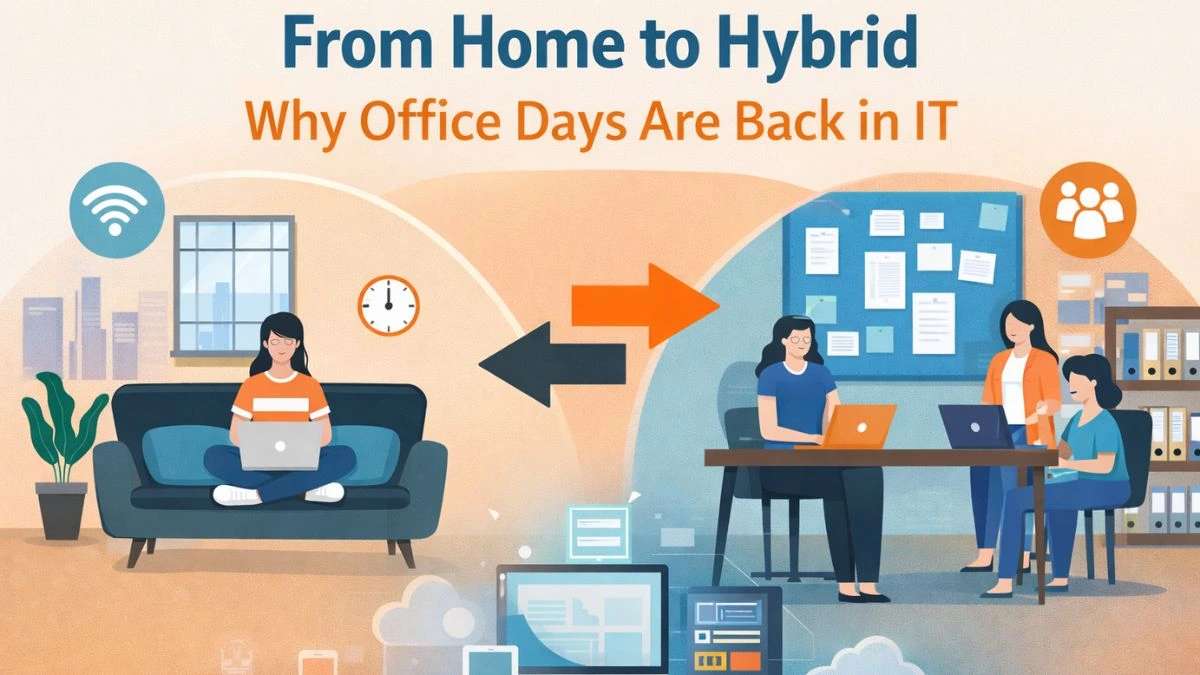
From Home to Hybrid In a major change to post-pandemic work culture, Indian IT companies are transitioning away from unrestricted remote work and embracing structured hybrid work models — where employees split time between home and office. This shift, described as “Hybrid, not home”, marks the end of widespread permanent work-from-home (WFH) perks that were common during COVID-19.
Many firms aren’t forcing full-time office attendance anymore, but they are tightening hybrid rules — increasing office days and adding attendance requirements. This trend shows that even though remote work remains valuable, businesses now see benefits in balancing flexibility with in-person collaboration.
In this article, we break down why this shift is happening, how the hybrid models look in practice, what employees think, and how it affects the future of work — with FAQs and expert insights.
1. Why IT Companies Are Moving Away From Full-Time WFH
📈 Business Needs Have Changed
During the pandemic, remote work became a major employee benefit. But now:
- Clients demand faster delivery and closer teamwork.
- Revenue growth has slowed in the IT sector, pushing companies to increase productivity and collaboration.
- Artificial intelligence and rapid project cycles require frequent team interaction.
Many companies now believe that in-person work helps with problem-solving, client interactions, and effective training of new staff — especially those early in their careers.
👥 Hybrid Boosts Team Collaboration
Hybrid work is seen as a middle ground — it offers flexibility and in-office cohesion. Employers say physical presence helps with:
- quicker decision-making
- mentoring young talent
- culture building
- real-time feedback
Analysts also point out that hybrid models help firms balance employee expectations and business goals.
2. How Hybrid Policies Are Changing in Major IT Firms
Different IT leaders have introduced varying hybrid policies:
🏢 TCS — Stricter Attendance Rules
Tata Consultancy Services (TCS) now links employee variable pay and career progression to office attendance. People with higher attendance get full incentives. Those who skip office days get reduced bonus payouts.
💼 Infosys — Monthly Office Minimum
Infosys mandates a set number of in-office days per month (e.g., 10 days) — with exemptions allowed only for health or personal needs.
📅 Wipro — Weekly Minimum Requirement
Wipro requires employees to be in the office at least three days a week, with a minimum six hours on those days — or face leave deductions.
📍 Accenture & Others — Flexible Approach
Some firms like Accenture ask for at least one office day a week or follow team-level expectations rather than strict attendance targets.
3. What This Means for Employees
🙋 Pros of Hybrid Return
✔ Better collaboration and teamwork
✔ Hands-on mentoring for newer employees
✔ Stronger organisational culture
✔ Combination of flexibility and structure
🤔 Challenges and Concerns
✘ Increased commuting time and cost
✘ Reduced full-time flexibility
✘ Potential stress balancing home life with office presence
✘ Disagreements between policy and individual work preferences
Employees have mixed feelings — some appreciate structured interaction, while others worry that hybrid policies undo the gains of work-from-home culture.
4. Hybrid Work vs. Full Remote and Full Office
🔁 Hybrid Work
✔ Offers best of both worlds
✔ Balanced flexibility and collaboration
✔ Favoured by many Indian IT firms
🏠 Full Remote
✔ Maximum flexibility
✘ Harder for team cohesion
✘ Not ideal for client-focused or sensitive roles
🏢 Full Office
✔ Strong teamwork dynamics
✘ Less flexibility for employees
✘ May affect retention of top talent
Both employers and employees are now learning that one size does not fit all. Hybrid work is evolving to become more structured and outcome-focused than simply “working from anywhere.”
5. Future Trends in the Workplace
🔍 More Tailored Hybrid Models
Companies are experimenting with:
- Role-based office requirements
- Team-based rules
- Flexible schedules for special needs
🤝 Tech’s Changing Workforce Expectations
Younger workers often want flexible work options that fit life goals, not rigid 9-to-5 office days. Balancing flexibility with in-person collaboration will be crucial to retaining talent.
📊 Ongoing Evolution
Work policies will continue to adjust as:
- business priorities evolve
- technology reshapes job roles
- worker expectations change
This means hybrid models will likely stay, but in refined forms that emphasize results and balance.
Also Read : The Work-From-Anywhere Lifestyle
Conclusion
The shift from “home” to “hybrid” reflects a broader change in how IT companies and employees view productivity, collaboration, and work-life balance. While the freedom of work-from-home remains appealing, hybrid models are emerging as the practical future of work — blending flexibility with the proven benefits of face-to-face interaction.
IT firms in India and globally will keep refining these policies to support organisational goals, satisfy employee expectations, and adapt to the dynamic needs of the modern workplace.
If you’re a job seeker, employee, or business leader, understanding hybrid policies helps you navigate the future of work with confidence.
Frequently Asked Questions (FAQs)
❓ What is “hybrid work”?
Hybrid work combines in-office and remote work: employees spend some days working from home and others at the office.
❓ Why are IT companies reducing work-from-home days?
Firms feel hybrid work supports better collaboration, faster problem-solving, team building, and client engagement, especially as business competition grows.
❓ Will hybrid replace full remote work entirely?
Not fully — some roles and companies may still allow extended remote work, but structured hybrid is becoming the dominant model.
❓ Do hybrid policies affect pay?
Yes, in some cases (e.g., TCS), pay or bonuses are tied to office attendance compliance.
❓ Is hybrid work good for employees?
It has both advantages (flexibility, collaboration) and challenges (commutes, reduced full WFH). The fit depends on individual preferences and job roles.