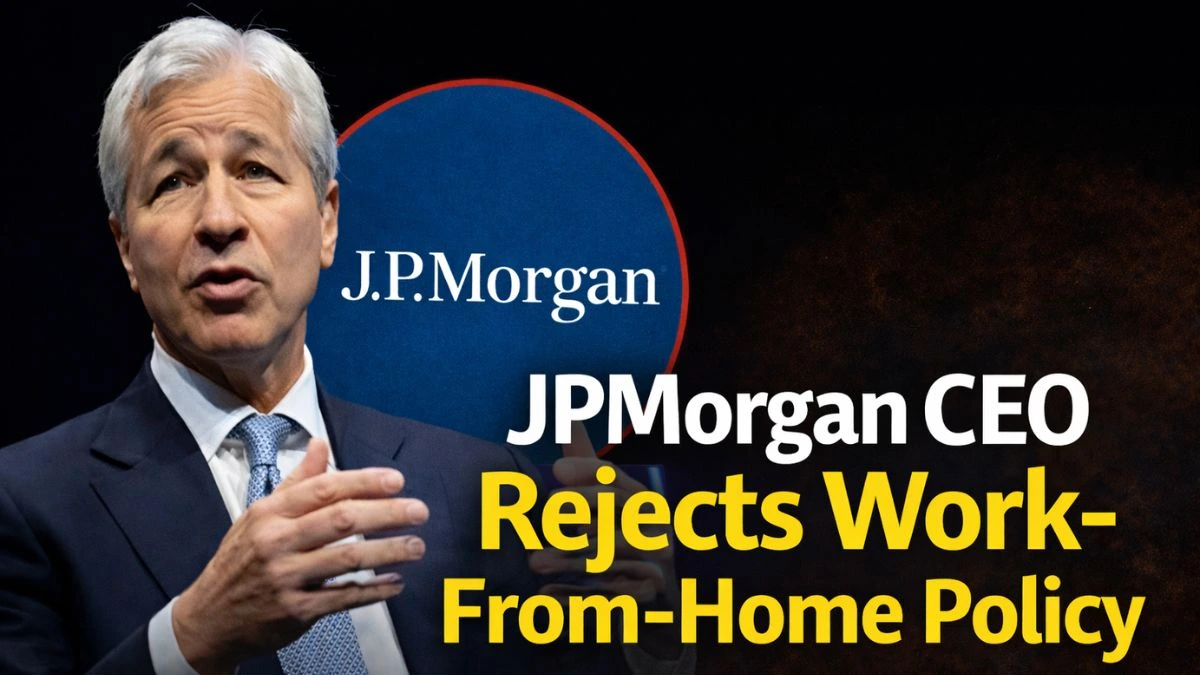
The work-from-home debate is far from over—and JPMorgan Chase CEO Jamie Dimon has once again made his position crystal clear: remote and hybrid work are not acceptable long-term solutions.
Despite growing employee pressure, a signed petition, and changing global work trends, Dimon has doubled down on a full return-to-office (RTO) mandate, arguing that in-person work is essential for learning, productivity, and company culture.
🔍 What Did Jamie Dimon Say About WFH?
Speaking at the Future Investment Initiative, alongside other Wall Street leaders, Jamie Dimon dismissed the idea that remote work can fully replace office culture.
While clarifying that he is “not making fun of Zoom,” Dimon stressed that:
- Junior employees learn best through direct observation
- Mentorship and training suffer in remote settings
- Collaboration and quick feedback are harder online
- Mistakes are corrected faster in physical offices
According to him, these elements are critical for long-term growth, especially in high-pressure sectors like investment banking.

✍️ The Employee Petition: What Happened?
Earlier this year, more than 2,000 JPMorgan employees signed a petition requesting the bank to retain hybrid work options.
Their concerns included:
- Rising commuting costs
- Childcare responsibilities
- Long travel times
- Connectivity issues in some regions
The petition made its way to Dimon—but the response was firm and controversial.
During an internal town hall, Dimon reportedly said employees unhappy with the policy were free to look elsewhere. Although he later apologised for his strong language, he did not reverse the decision.
🧠 Why JPMorgan Is Pushing Return to Office
Jamie Dimon believes office-based work delivers benefits that remote setups simply cannot replicate:
1️⃣ Faster Learning for Young Employees
Dimon argues that junior bankers develop skills by watching senior colleagues, something Zoom calls can’t fully provide.
2️⃣ Stronger Company Culture
According to JPMorgan leadership, culture weakens when teams are scattered and interactions become transactional.
3️⃣ Better Collaboration & Accountability
Spontaneous discussions, quick problem-solving, and teamwork thrive better in shared physical spaces.
📉 RTO Push Comes Amid Layoffs
The return-to-office mandate has drawn criticism because it coincides with:
- 💰 Record-breaking annual profits reported in January
- 👥 Around 1,000 job cuts
- ⚠️ Signals of further layoffs through mid-year
As of the end of 2024, JPMorgan employed over 317,000 people globally.
Dimon has also instructed teams to improve efficiency by 10%, reducing:
- Internal reports
- Meetings
- Training sessions
Supporters say it’s about discipline; critics say it adds pressure during uncertain times.
🌍 The Bigger Picture: WFH vs RTO Debate
JPMorgan’s stance reflects a larger shift among major corporations, especially in finance and consulting.
While many tech companies embrace remote work, traditional firms argue that:
- Innovation slows remotely
- Talent development weakens
- Leadership pipelines suffer
At the same time, employees globally continue to demand flexibility, balance, and autonomy.
💬 Employee Reactions: Divided Opinions
The RTO decision has split opinion:
Supporters Say:
- Office work builds stronger teams
- Career growth is faster in-person
- Remote work reduced accountability
Critics Argue:
- Productivity stayed high during WFH
- Flexibility improves mental health
- Forcing RTO may cause talent loss
🔮 What This Means for the Future of Work
JPMorgan’s decision sends a strong signal:
WFH may not be here to stay for everyone—especially in finance.
Experts believe:
- Senior roles may demand office presence
- Entry-level roles could be most affected
- Companies may lose talent to remote-first competitors
The debate is no longer about whether people can work remotely—but who gets to decide
Also Read : Top Remote Work Trends in 2026 You Can’t Ignore
🏁 Final Thoughts
Jamie Dimon’s firm stance has reignited the global WFH vs RTO debate. While JPMorgan sees office work as essential for growth, many employees see flexibility as the future.
As companies redefine workplace norms, one thing is clear:
The future of work won’t look the same for everyone.
❓ FAQs: JPMorgan Return-to-Office Policy
Q1. Does JPMorgan allow work from home?
JPMorgan largely requires employees to work full-time from the office, with limited exceptions.
Q2. Why is Jamie Dimon against hybrid work?
He believes mentorship, training, and collaboration suffer without in-person interaction.
Q3. How many employees opposed the policy?
Over 2,000 employees signed a petition requesting hybrid work options.
Q4. Can employees refuse to return to office?
Officially, no. Employees unwilling to comply may need to seek other opportunities.
Q5. Is JPMorgan laying off employees?
Yes. Around 1,000 employees were laid off, with more cuts expected.
Q6. Does RTO improve productivity?
Opinions vary. JPMorgan leadership believes it does, while employees remain divided.