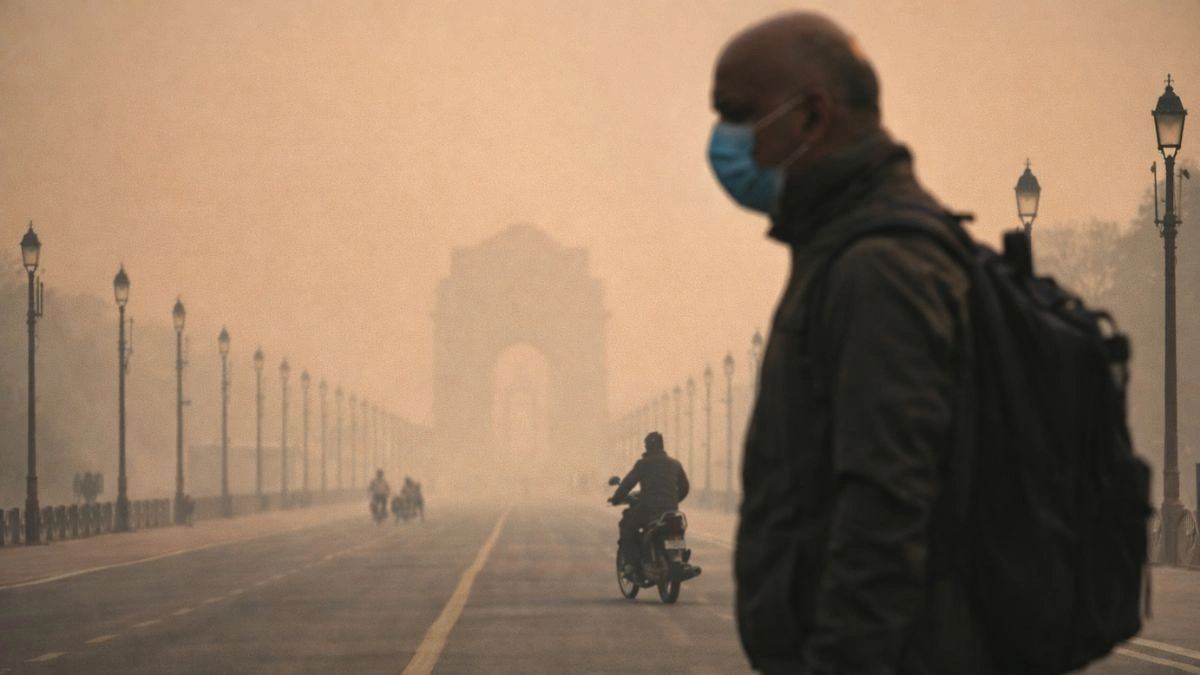
When Delhi’s Air Quality Index (AQI) crosses 350 — classified as “severe” — the city doesn’t just see hazy skies. Schools close. Construction halts. And in several past instances, authorities have directed private offices to implement work-from-home (WFH) policies to reduce traffic emissions.
In cities like Delhi and the wider National Capital Region, air pollution is not just an environmental issue — it’s a public health emergency. With AQI levels touching 356 or even higher during peak smog season, governments have activated emergency measures under the Graded Response Action Plan (GRAP), including remote work mandates.
But how effective is pollution-related WFH? And what does it mean for businesses, employees, and the future of work?
Let’s break it down.
What Does AQI 356 Actually Mean?
An AQI of 356 falls under the “Severe” category. At this level:
- Healthy individuals may experience breathing discomfort.
- People with asthma or heart conditions face serious risks.
- Outdoor activity is strongly discouraged.
- Visibility drops due to smog.
Pollution in Delhi typically worsens in winter due to:
- Vehicular emissions
- Construction dust
- Industrial pollution
- Crop residue burning in neighboring states
- Weather conditions that trap pollutants
When pollution reaches such extreme levels, reducing road traffic becomes a priority — and that’s where WFH comes in.
Why Authorities Mandate Work From Home During Pollution Peaks
1. To Cut Vehicular Emissions
Transport is one of the biggest contributors to Delhi’s air pollution. Millions commute daily across Delhi NCR. If even 30–40% of private office employees work remotely, traffic congestion drops significantly.
Fewer cars mean:
- Reduced carbon monoxide and nitrogen oxide emissions
- Lower fuel consumption
- Decreased roadside dust disturbance
2. To Protect Public Health
Severe AQI impacts productivity. Employees suffer from:
- Eye irritation
- Throat infections
- Fatigue
- Headaches
Remote work allows people to stay indoors with air purifiers, reducing exposure.
3. To Ease Urban Pressure
WFH reduces pressure on:
- Public transport systems
- Fuel demand
- Emergency healthcare services
During peak smog events, every small reduction helps.
Has Pollution-Driven WFH Worked Before?
Yes — especially during peak winter pollution waves in previous years.
Authorities in Delhi have:
- Directed private offices to operate at 50% capacity
- Encouraged full WFH for non-essential services
- Restricted diesel vehicles
- Suspended construction activities
Traffic volumes noticeably decreased during these periods, though experts argue WFH alone cannot solve Delhi’s pollution crisis. It is a short-term emergency response, not a permanent fix.
Impact on Businesses
Positive Effects
- Business continuity without shutdowns
- Reduced office utility costs
- Increased flexibility
- Improved employee safety
Challenges
- Coordination issues for traditional companies
- Productivity concerns (for some sectors)
- Cybersecurity risks
- Not feasible for manufacturing or on-site roles
IT, marketing, finance, consulting, and digital services adapt more easily compared to logistics or industrial sectors.
Is Pollution WFH Becoming a Seasonal Policy?
Many experts believe Delhi is moving toward a hybrid emergency model:
- Regular office operations during normal AQI
- Hybrid work during “Very Poor” levels
- Mandatory WFH during “Severe” AQI
Companies are increasingly building remote readiness into HR policies to prepare for:
- Pollution emergencies
- Extreme weather events
- Public health crises
This signals a larger shift: environmental conditions are now influencing corporate work structures.
The Bigger Question: Can Remote Work Reduce City Pollution Long-Term?
WFH can reduce:
- Peak-hour congestion
- Daily commute emissions
- Fuel dependency
However, pollution in Delhi is multi-source. Vehicle emissions are only one part of the problem. Long-term solutions require:
- Cleaner public transport
- Electric vehicle adoption
- Dust control enforcement
- Industrial emission regulation
- Regional crop-burning solutions
Remote work is helpful — but not a silver bullet.
What Companies Should Do During AQI Emergencies
If your business operates in high-pollution zones like Delhi NCR, consider:
1. Creating an AQI Response Policy
Define thresholds for remote work activation.
2. Investing in Remote Infrastructure
Cloud systems, VPNs, secure communication tools.
3. Supporting Employee Health
Offer air purifier reimbursements or wellness support.
4. Communicating Clearly
Keep employees informed about AQI levels and company decisions.
Prepared companies handle pollution emergencies without operational disruption.
The Future of Environment-Driven Work Culture
Pollution-triggered WFH highlights a new trend: climate and environmental risks shaping workplace policies.
As cities face:
- Air pollution
- Heatwaves
- Flooding
- Extreme weather
Remote and hybrid models may become standard emergency responses.
Delhi’s AQI crises are not isolated events — they are signals of how environmental stress reshapes urban corporate life.
Also Read : QA Specialist Content & Digital Quality – Fresher Role Explained
Final Thoughts
Pollution-related work-from-home mandates in Delhi are a practical response to severe AQI crises. When levels hit 356 and beyond, reducing daily commutes becomes both an environmental and health necessity.
For businesses, this is no longer a temporary adjustment — it’s strategic planning. For employees, it’s protection. And for cities like Delhi, it’s a reminder that the future of work is increasingly tied to the future of the environment.
If your organization operates in high-risk pollution zones, now is the time to build a smart, flexible, pollution-ready work model.
FAQs: Pollution-Related Work From Home in Delhi
1. At what AQI level does Delhi mandate work from home?
Generally during “Severe” levels (AQI 400+) under GRAP Stage IV, though advisory WFH may begin earlier around 350+ depending on severity.
2. Is WFH compulsory for all companies?
Usually mandated for private offices except essential services. Implementation may vary based on government notifications.
3. Does WFH significantly reduce pollution?
It reduces traffic emissions temporarily but does not eliminate other pollution sources.
4. Which sectors are most affected?
IT, marketing, finance, education, and consulting can shift online easily. Manufacturing and retail cannot.
5. Is pollution-based WFH a long-term solution?
No. It’s an emergency measure. Long-term pollution control requires structural reforms.
6. How can employees protect themselves during severe AQI?
- Use N95 masks outdoors
- Limit outdoor exposure
- Use indoor air purifiers
- Monitor AQI daily