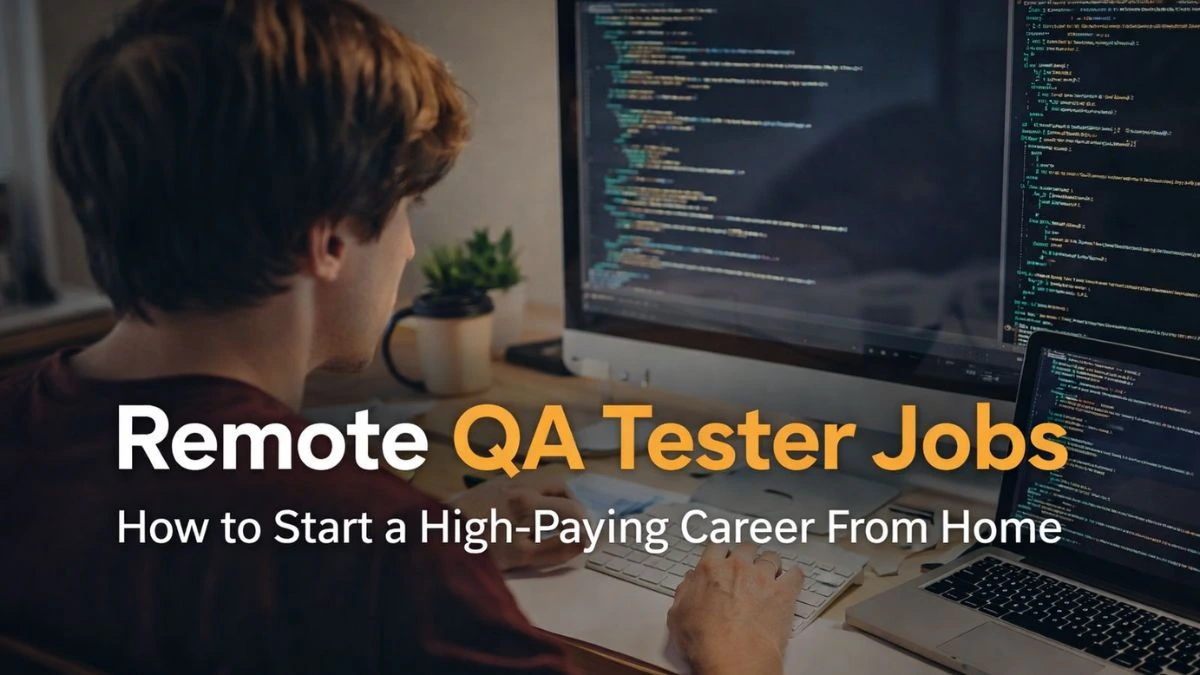
Remote work has transformed the tech industry, and Remote QA Tester jobs are now among the most in-demand work-from-home roles globally. Companies need skilled testers to ensure their websites, apps, and software work smoothly—without bugs, crashes, or user issues.
In this guide, you’ll learn what a Remote QA Tester does, required skills, salary expectations, tools, and how to start—even as a beginner.
🔹 What Is a Remote QA Tester?
A Remote Quality Assurance (QA) Tester is responsible for testing software products from home. Instead of working in an office, testers collaborate with developers online to find bugs, usability issues, and performance problems before software is released to users.
Remote QA Testers may work full-time, part-time, or as freelancers for international companies.
🔹 What Does a Remote QA Tester Do?
Typical responsibilities include:
- Testing websites, mobile apps, and software systems
- Identifying bugs, errors, and performance issues
- Writing test cases and test reports
- Performing manual and automated testing
- Communicating issues with developers remotely
- Ensuring software meets quality and user standards
🔹 Skills Required for Remote QA Tester Jobs
You don’t need to be a coding expert to start, but these skills are essential:
✅ Technical Skills
- Manual testing knowledge
- Basic understanding of software development
- Test case creation and documentation
- Bug tracking systems (JIRA, Bugzilla)
- Automation basics (Selenium, Cypress – optional for beginners)
✅ Soft Skills
- Attention to detail
- Strong communication skills
- Problem-solving ability
- Time management for remote work
🔹 Tools Used by Remote QA Testers
Most companies expect familiarity with popular QA tools such as:
- JIRA / Trello – bug tracking
- Selenium – automation testing
- TestRail – test management
- Postman – API testing
- BrowserStack – cross-browser testing
- GitHub – collaboration
Learning these tools significantly improves your job chances.
🔹 Remote QA Tester Salary in 2026
Salary depends on experience, skills, and company location:
- Beginner: $800 – $1,500/month
- Mid-Level: $2,000 – $4,000/month
- Senior QA Tester: $5,000+ per month
- Freelancers: $15 – $50 per hour
Remote roles often pay higher when working with international clients.
🔹 How to Become a Remote QA Tester (Step-by-Step)
- Learn manual testing fundamentals
- Practice testing real websites and apps
- Take online QA courses or certifications
- Learn basic automation tools
- Create a QA testing portfolio
- Apply on remote job platforms
- Start freelancing to gain experience
🔹 Where to Find Remote QA Tester Jobs
Popular platforms include:
- Indeed
- We Work Remotely
- Turing
- Upwork & Fiverr
- Remote OK
🔹 Advantages of Remote QA Tester Jobs
- Work from anywhere
- Flexible schedules
- Global job opportunities
- High demand and job security
- Career growth in tech industry
🔹 Certifications That Help You Get Hired Faster
While not mandatory, these certifications improve trust and visibility:
- ISTQB Foundation Level
- Google Software Testing Certificate
- Udemy / Coursera QA courses
- Selenium Automation Certification
- Agile & Scrum Fundamentals
🔹 Challenges of Remote QA Testing
- Time zone differences
- Self-discipline required
- Communication gaps
- Constant skill upgrades needed
Also Read : Legit Work From Home Jobs in 2026: Real Opportunities That Actually Pay
🔹 Final Thoughts
A Remote QA Tester career is a smart choice for anyone looking to enter tech without heavy coding. With rising demand, flexible work options, and strong earning potential, QA testing offers long-term growth and stability in the work-from-home world.
❓ FAQs: Remote QA Tester Jobs
Q1. Can beginners become Remote QA Testers?
Yes. Many start with manual testing and grow into automation roles with practice.
Q2. Do I need coding skills?
Basic coding helps, but it’s not mandatory for entry-level positions.
Q3. Is Remote QA Testing a good career in 2026?
Absolutely. With growing software demand, QA roles remain critical and stable.
Q4. Can I work as a freelance QA tester?
Yes, many testers work independently and earn per project or hourly.
Q5. How long does it take to learn QA testing?
Basic skills can be learned in 2–3 months with consistent practice.