Working from home has transformed the way people think about jobs, careers, and daily life. What was once considered a luxury or temporary arrangement has now become a long-term and reliable work model for millions of professionals around the world.
In 2026, remote work is no longer limited to IT professionals or freelancers. From customer support and marketing to finance, education, and healthcare, work-from-home opportunities are available across industries. Employees enjoy flexibility, while companies benefit from higher productivity and lower costs.
In this detailed guide, we’ll explore the key benefits of working from home, how it impacts employees and employers, and why remote work is shaping the future of work.
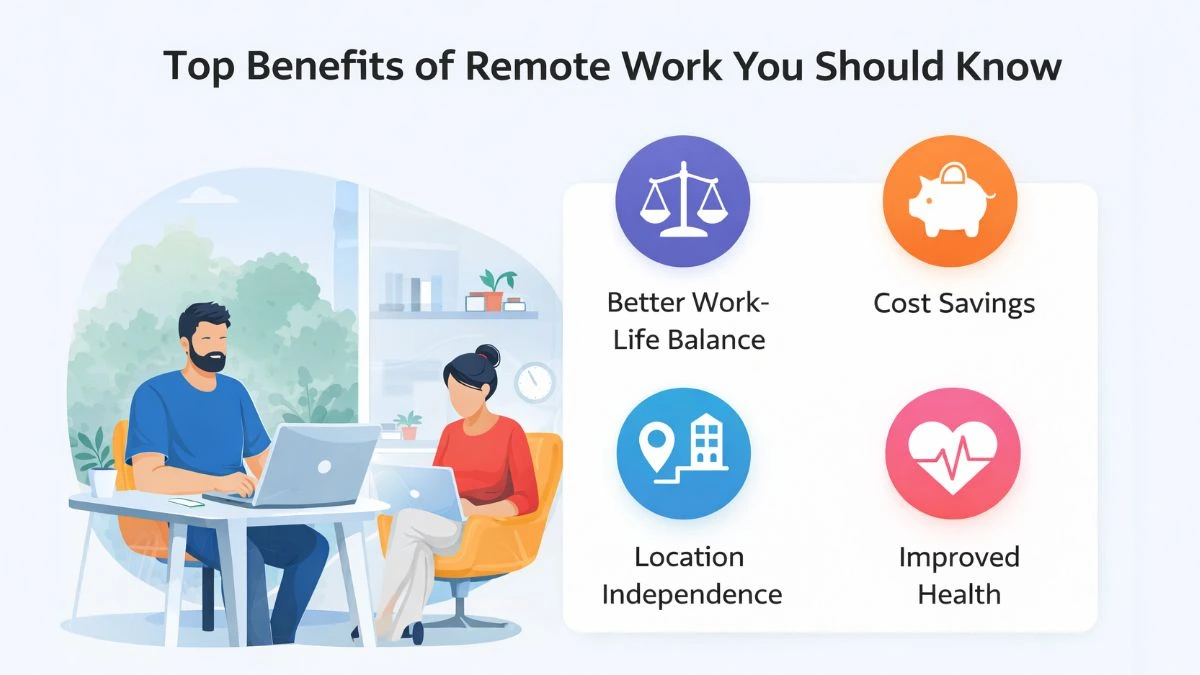
1. Better Work-Life Balance
One of the biggest benefits of working from home is improved work-life balance. Remote jobs often allow flexible schedules, meaning employees can manage personal and professional responsibilities more effectively.
Without rigid office hours, people can:
- Spend more time with family
- Attend personal appointments easily
- Focus on hobbies and self-care
- Avoid burnout
This flexibility leads to a healthier lifestyle and greater job satisfaction.
2. No Daily Commute Stress
Commuting is one of the most stressful parts of traditional office jobs. Long travel hours, traffic congestion, and crowded public transport take a toll on mental and physical health.
Working from home eliminates commuting entirely, which means:
- Saving hours every week
- Reduced stress and anxiety
- Lower transportation expenses
- More energy for productive work
The time saved can be used for exercise, rest, or personal growth.
3. Significant Cost Savings
Remote work helps employees save money in many ways. Expenses like fuel, public transport, parking fees, office clothing, and daily lunches are greatly reduced.
On average, people working from home can save thousands of dollars every year. Employers also save on office rent, electricity, maintenance, and other overhead costs.
This financial benefit makes remote work a win-win for both sides.
4. Location Independence
Working remotely allows you to work from anywhere. You are no longer tied to a specific city or country for job opportunities.
This is especially beneficial for:
- People living in small towns or rural areas
- Digital nomads who love to travel
- Military spouses and frequent movers
- Professionals avoiding high-cost cities
Location independence opens doors to global opportunities without relocation.
5. Increased Productivity
Many studies show that remote workers are often more productive than office-based employees. A home environment usually has fewer distractions like unnecessary meetings or office noise.
Benefits include:
- Better focus
- Flexible working hours
- Fewer interruptions
- Performance-based evaluation
When employees are trusted and given autonomy, productivity naturally improves.
6. Improved Mental and Physical Health
Working from home positively affects overall health. Employees can create a comfortable work environment that suits their needs.
Health benefits include:
- Reduced stress levels
- Better sleep routines
- Healthier eating habits
- More time for exercise
- Less exposure to illnesses
Remote work allows people to prioritize well-being without sacrificing career growth.
7. Greater Inclusivity and Accessibility
Remote work promotes diversity and inclusion by allowing companies to hire talent from different backgrounds and abilities.
It supports:
- People with disabilities
- Caregivers and parents
- Individuals needing flexible schedules
- Workers with health limitations
By removing physical workplace barriers, remote work creates equal opportunities for everyone.
8. Environmental Benefits
Working from home contributes to environmental sustainability. Fewer commuters mean reduced carbon emissions and lower pollution levels.
Environmental advantages include:
- Reduced fuel consumption
- Less traffic congestion
- Lower office energy usage
- Decreased paper waste
Remote work supports global efforts toward climate change and sustainable living.
9. Customizable Work Environment
At home, employees can design their workspace according to comfort and productivity needs.
You can choose:
- Ergonomic furniture
- Proper lighting
- Quiet surroundings
- Personalized setups
A customized workspace improves posture, reduces health issues, and enhances focus.
10. Higher Job Satisfaction and Retention
Employees who work from home tend to be happier and more loyal to their companies. Flexible work arrangements lead to better morale and long-term commitment.
Employers offering remote work often experience:
- Lower employee turnover
- Higher engagement
- Stronger employer branding
Happy employees are more motivated and productive.
Best Jobs That Offer Work From Home
Some popular remote job roles include:
- Content writing
- Digital marketing
- Customer support
- Virtual assistant
- Data entry
- Software development
- Online teaching
- Graphic design
Many global companies now hire remote workers full-time and part-time.
Also Read : Work From Home Influencer Jobs: How to Earn Money Online in 2026
Final Thoughts
The benefits of working from home go far beyond convenience. From better health and savings to improved productivity and environmental impact, remote work is shaping the future of employment.
As technology advances and companies adapt, work-from-home jobs will continue to grow. If you’re looking for flexibility, balance, and long-term career satisfaction, remote work could be the perfect choice for you.
FAQs About Working From Home
1. Is working from home good for mental health?
Yes, for many people. Remote work reduces stress from commuting, allows flexible schedules, and creates a comfortable environment, which improves mental well-being.
2. Can working from home increase productivity?
Absolutely. With fewer distractions and flexible work hours, many remote workers perform better than in traditional office settings.
3. Are work-from-home jobs reliable?
Yes. Many companies now offer permanent remote positions with stable income, benefits, and career growth opportunities.
4. What skills are needed for remote work?
Common skills include communication, time management, self-discipline, digital literacy, and problem-solving.
5. Is working from home suitable for everyone?
While remote work offers many benefits, it may not suit people who prefer social office environments. Hybrid models are a good alternative.