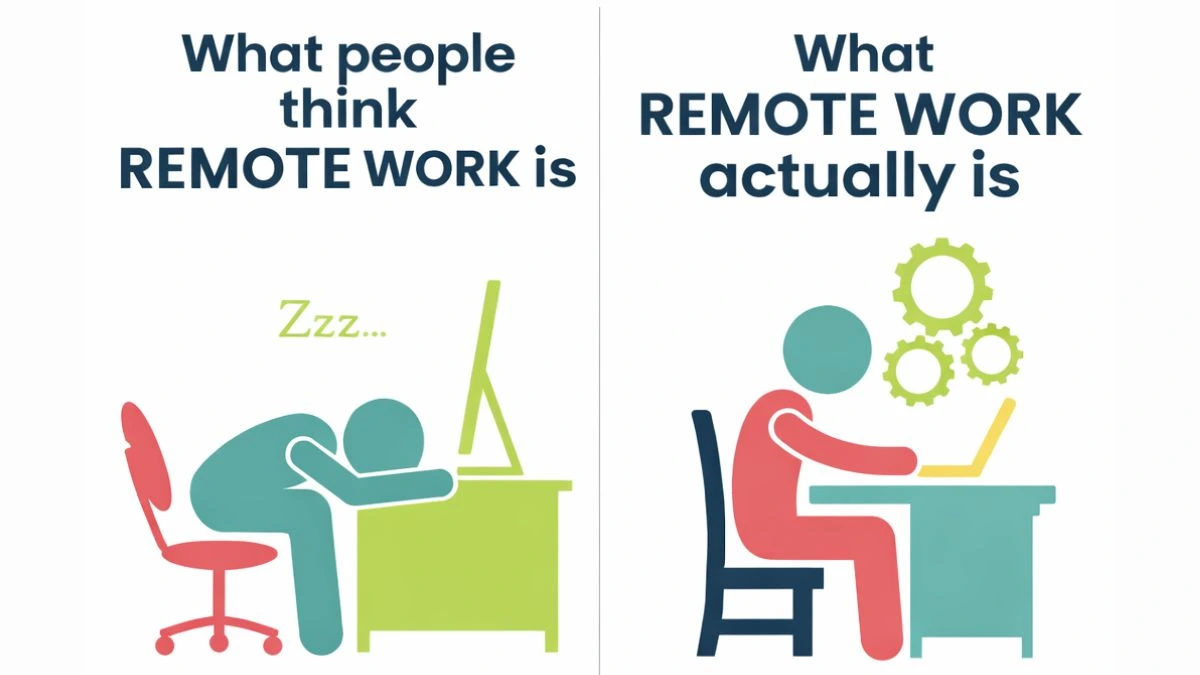
The argument over working from home keeps coming back. Some say employees are less productive outside the office. Others argue remote work has improved efficiency and morale.
But if you look closely, the debate isn’t really about productivity at all.
It’s about inequality.
Hybrid working has quietly become part of post-pandemic life. For many professionals, splitting time between home and office is now normal. Yet millions of workers never had that option — and still don’t.
That divide tells us far more about modern Britain than any productivity report.
How Working From Home Became Normal
During the Covid lockdowns, businesses had no choice but to send office staff home. What started as an emergency measure turned into a large-scale experiment.
The surprising result? Many companies discovered work could continue — sometimes just as effectively — outside traditional offices.
Video meetings replaced conference rooms. Digital tools replaced paper systems. Commutes disappeared.
When restrictions ended, a full return to the office never fully happened. Instead, hybrid working settled into place.
For office-based roles, it became common to work from home two or three days a week.
But that shift was never universal.
The Unequal Access to Flexibility
Here’s the uncomfortable truth: working from home is far more available to some groups than others.
You’re much more likely to work remotely if you:
- Have a university degree
- Work in finance, tech, media, or administration
- Live in a major city
- Earn a higher income
You’re far less likely if you work in:
- Retail
- Hospitality
- Construction
- Healthcare
- Manufacturing
- Transport
For these sectors, physical presence is essential. No amount of debate changes that.
This creates a clear divide:
One group gains flexibility, time savings, and improved work-life balance.
The other continues fixed schedules with no remote option.
That’s not about productivity. It’s about the structure of the economy.
What Does the Evidence Say About Productivity?
Claims that remote workers are “less productive” often make headlines. But large-scale research generally shows:
- Productivity stays roughly the same in hybrid models
- In some cases, productivity slightly improves
- Employee satisfaction increases significantly
If working from home had seriously damaged output, most companies would have ended it quickly.
Instead, many employers now promote flexibility as a recruitment benefit.
That suggests the productivity crisis some critics warn about isn’t strongly supported by evidence.
Why Flexibility Matters So Much
For those who can access it, hybrid work brings real benefits.
1. Time Saved on Commuting
Less travel means more time for family, exercise, or rest.
2. Lower Costs
Reduced spending on fuel, transport, and eating out.
3. Improved Mental Health
Many workers report lower stress levels when working remotely part-time.
4. Greater Inclusion
People with disabilities or chronic health conditions may find remote work removes physical barriers.
5. Support for Parents and Carers
Flexible schedules help balance childcare and caregiving responsibilities.
These advantages explain why many employees resist full-time office mandates.
But again — not everyone gets these benefits.
Why the Debate Feels So Emotional
Working from home has become symbolic.
For critics, it represents:
- A decline in traditional work culture
- A loss of discipline
- An unfair advantage for office-based professionals
For supporters, it represents:
- Trust-based management
- Modernisation
- A healthier balance between work and life
Because it touches on class, geography, and opportunity, the conversation often becomes heated.
It’s not just about where people sit with their laptops.
It’s about who has control over their time.
The Hidden Class Divide
One reason the debate continues is that flexibility often overlaps with income.
Higher-paid workers tend to have:
- Greater autonomy
- Negotiation power
- Skills suited to digital work
Lower-paid workers often have:
- Fixed shifts
- Limited bargaining power
- Roles tied to physical locations
When political figures criticise working from home, some workers hear it as a critique of privilege. Others see it as dismissing legitimate work-life improvements.
That tension reveals a deeper economic reality: modern flexibility is unevenly distributed.
Who Might Lose From Hybrid Working?
Hybrid work isn’t perfect.
There are challenges:
- Younger workers may miss informal mentoring
- Team communication can suffer if poorly managed
- City centre businesses lose daily foot traffic
Some companies are increasing required office days. But many stop short of demanding five days a week.
Why? Because flexibility has become a powerful retention tool.
Surveys show many employees would consider leaving if forced back full-time.
The Bigger Question: What Kind of Work Future Do We Want?
Instead of arguing about whether people work harder at home, we might ask better questions:
- How can flexibility expand without widening inequality?
- How do we support workers whose jobs can’t go remote?
- Should government policy encourage fairer access to flexible work?
The future of work will likely remain mixed. Some jobs require presence. Others don’t.
But if flexibility becomes a permanent benefit only for the already advantaged, it risks deepening existing divides.
Why This Matters for Businesses
For employers, the lesson is clear:
Flexibility is no longer just a perk — it’s part of workplace expectations for many skilled professionals.
Companies that balance collaboration with autonomy are more likely to:
- Attract top talent
- Retain experienced staff
- Improve morale
- Reduce burnout
However, businesses must also ensure that remote workers are not overlooked for promotions or opportunities.
The goal isn’t simply location freedom — it’s fairness.
Also Read : JPMorgan CEO Rejects Work From Home Policy
Final Thoughts
The debate over working from home isn’t going away. But focusing only on productivity misses the bigger picture.
Hybrid working hasn’t revolutionised the economy. Nor has it destroyed discipline.
What it has done is highlight who has choice — and who doesn’t.
For some workers, flexibility is now normal.
For others, it was never possible.
Understanding that difference tells us far more about modern inequality than any argument about where people open their laptops.
Frequently Asked Questions (FAQs)
1. Is working from home less productive?
Most studies show productivity remains stable or slightly improves in hybrid models. Results depend on management style and job type.
2. Why is working from home linked to inequality?
Because access is concentrated among higher-paid, office-based roles, while many lower-paid jobs cannot be done remotely.
3. Will companies end hybrid work?
Some are tightening policies, but widespread full-time office returns seem unlikely due to employee resistance and recruitment competition.
4. Does hybrid work benefit parents?
Yes. Flexible schedules often make childcare easier to manage, especially with rising childcare costs.
5. What industries rarely allow remote work?
Retail, healthcare, construction, hospitality, and manufacturing typically require physical presence.
6. Could hybrid working increase the gender pay gap?
It could — if remote workers are overlooked for promotions. But well-managed flexibility may also help reduce the gap by supporting carers.
7. What is the core issue in the work-from-home debate?
The main issue isn’t productivity. It’s unequal access to flexibility and control over working conditions.